
That Off Strip Hotel Price Just Made You Do a Double Take!
You’re deep in a late-night hotel search spiral. Strip hotels are quoting you $250 a night before resort fees, and then you spot it: a suite with a pool view, a king bed the size of a small apartment, and a price tag that’s half of what the big-name casinos are charging. The catch? It’s “off the Strip.”
Your brain immediately starts negotiating with itself. How far off the Strip are we talking? Will I spend the savings on Uber rides? Am I going to miss out on the whole Vegas experience?
These are the right questions. And honestly, the answer isn’t a simple yes or no. Staying off the Strip can be the single smartest decision of your entire trip, or it can leave you feeling stranded in a suburban parking lot wondering where the neon went. It all depends on what kind of Vegas trip you’re actually planning.
So let’s break this down for real. No vague advice, no “it depends” cop-outs. Just the honest pros, the honest cons, and enough detail for you to book with confidence.

First Things First: What “Off the Strip” Actually Means
Here’s where most advice falls apart. People say “off the Strip” like it’s one place. It’s not. Your experience will be wildly different depending on where you end up.
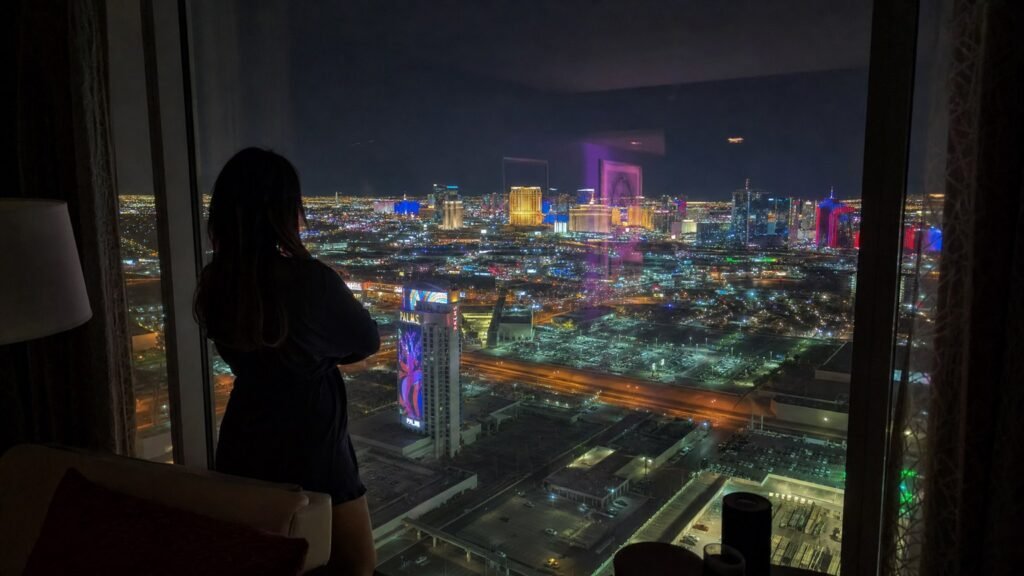
Just off the Strip (0.5 to 1 mile away): Hotels like the Palms, Rio, and Virgin Hotels Las Vegas. You can practically see the Strip from your window. A quick rideshare or even a walk gets you there.
Downtown and Fremont Street (3 to 4 miles north): A completely different flavor of Vegas. More gritty, more fun, more affordable. Walkable once you’re there, but you’ll need a ride to get to the Strip.
The neighborhood hubs (5 to 15 miles out): Summerlin to the west, Henderson to the southeast, Chinatown along Spring Mountain Road, and the Arts District south of downtown. These are where locals actually live, eat, and hang out.
That distinction matters enormously. A hotel one mile from the Strip and a hotel in Henderson are two completely different vacations.
The Pros: Why Going Off-Strip Might Be Your Best Move
Your Wallet Will Genuinely Thank You
This is the obvious one, but the savings go deeper than just the room rate. Off-Strip hotels regularly run 30 to 50 percent cheaper than comparable Strip properties. A room that goes for $200 a night at a mid-tier Strip casino might cost $90 at a locals’ resort with better amenities.
But the real savings sneak in everywhere else. Most locals’ casinos offer free self-parking, while Strip garages charge $20 to $40 a day. Resort fees at off-Strip properties are often lower or nonexistent. And dining? A steak dinner that costs $75 on the Strip runs $35 at a locals’ casino restaurant serving the same quality cut. Happy hour prices at off-Strip bars are what Strip bars charge at full price.
Over a four-night trip, a couple can realistically save $500 to $800 by staying off the Strip, even after factoring in transportation costs. That’s a helicopter tour of the Grand Canyon. That’s three shows. That’s a very nice dinner you wouldn’t have been able to afford otherwise.
Browse off-Strip Las Vegas hotels on Expedia →
Space, Quiet, and Something That Resembles Actual Sleep
Strip hotels are engineered to keep you awake, spending money, and slightly disoriented. The slot machines never stop singing, the hallways funnel you past the casino floor, and your room might be 300 square feet of tightly packed furniture.
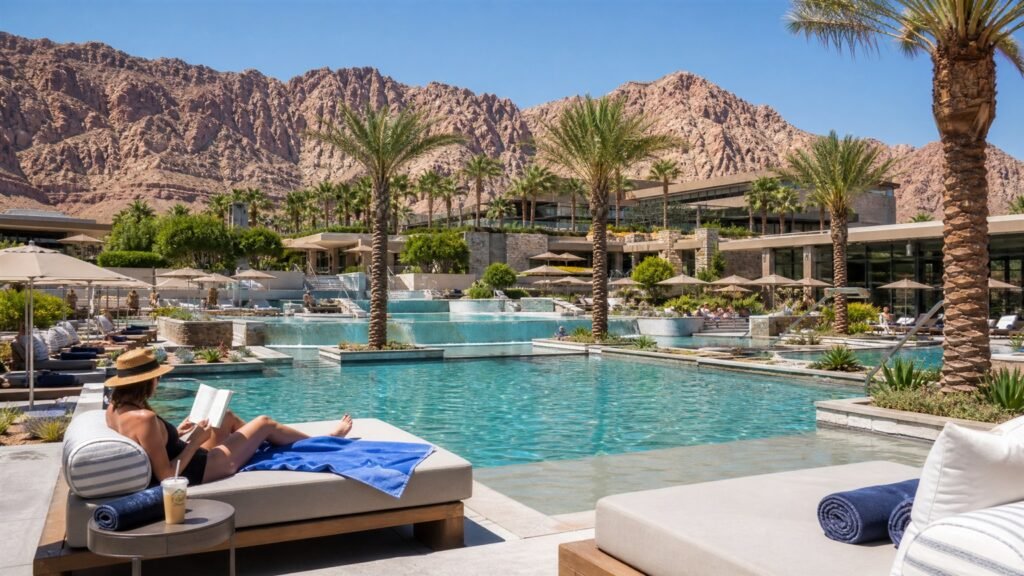
Off-Strip properties tend to give you more room to breathe. Suites are common, prices are reasonable, and the pools aren’t vibrating with a DJ set at ten in the morning. If you want a vacation where you can actually relax by a pool, read a book, and fall asleep without bass thumping through the walls, off-Strip hotels deliver that in a way the Strip simply can’t.
Red Rock Resort in Summerlin, for example, has a three-acre pool complex with cabanas, a spa with complimentary access to saunas and plunge pools, nine restaurants, and a 72-lane bowling alley. It feels like a luxury resort because it is one. It just happens to be 12 miles from the Bellagio.
Check rates at Red Rock Resort on Expedia →
The Food Scene Is (No Exaggeration) Better
This is the one that surprises people most. Las Vegas Chinatown, stretching along Spring Mountain Road about ten minutes west of the Strip, packs more than 150 restaurants into a few miles. Raku serves Japanese charcoal-grilled dishes that food critics fly in for. China Mama’s hand-pulled noodles have a cult following. Monta Ramen will ruin every other bowl of ramen you eat for the rest of your life. And you’ll spend a fraction of what you’d pay at a celebrity chef spot on the Strip.
The Arts District has its own thing going on: craft breweries, inventive cocktail bars, coffee shops that actually care about their espresso. Henderson and Summerlin both have restaurant scenes that locals are fiercely protective of.
Nobody is saying the Strip doesn’t have incredible food. It does. But the best meal of your Vegas trip might cost $15 and come from a strip mall on Spring Mountain Road, and that’s not an exaggeration.
You’ll See the Vegas That Locals Love
There’s a whole city out here that has nothing to do with slot machines and bottle service. The Arts District hosts monthly First Friday art walks with live music, street vendors, and gallery openings that draw thousands. Summerlin puts you 20 minutes from Red Rock Canyon’s red sandstone cliffs and hiking trails. Henderson is the launchpad for Lake Mead and Hoover Dam day trips.
Staying off the Strip doesn’t mean you’re missing Vegas. It means you’re seeing a different side of it, one that two million locals chose to build their lives around.
The Cons: What Nobody Mentions Until You’re Already There
Transportation Adds Up Faster Than You’d Think
Here’s the math nobody wants to do. A rideshare from a Summerlin hotel to the middle of the Strip runs about $18 to $25 each way, depending on traffic and time of day. On a weekend night, surge pricing can push that to $30 or more.
If you’re making two or three trips to the Strip per day, you’re looking at $60 to $100 daily in ride costs alone. Over a four-night trip, that can eat $300 or more of the savings you were so excited about.
Renting a car solves the rideshare math, but creates new problems. Strip casino parking runs $20 to $40 per day, garage navigation is genuinely stressful, and driving in Vegas on a weekend night is an experience best described as “aggressive patience.”
Public transit exists but is slow. The Deuce bus runs the length of the Strip but can take over an hour to cover the full route. The monorail only runs along the east side, and the stations are tucked behind the hotels, which means a long walk before you even board.
Spontaneity Takes a Real Hit
One of the best things about staying on the Strip is the freedom to wander. You finish dinner, walk past a theater, and grab last-minute tickets to a show. You hear music from a rooftop bar three hotels down and decide that’s where the night is going. You lose track of time and stumble back to your room at 2 a.m. because it’s a seven-minute walk.
Off the Strip, every outing becomes a planning exercise. Want to catch a late show? Better check rideshare availability. Heard about a great bar from someone at the pool? Cool, that’s a $20 ride and a 15-minute wait. The friction is real, and it changes the pace of your trip in ways you might not expect until you’re living it.

You Might Miss the Electric Energy (And That’s OK to Admit)
The Strip at night is ridiculous. It’s absurd and overwhelming and loud and completely unlike anywhere else on the planet. The Bellagio fountains erupting while thousands of people crowd the sidewalks. The way the light from a dozen mega-casinos turns midnight into something brighter than noon. The sheer audacity of the whole production.
You don’t get that energy at a suburban resort, no matter how nice the resort is. And for first-time visitors especially, skipping that experience might feel like going to New York and never seeing Times Square. It’s touristy, sure. But it’s touristy for a reason.
If the Strip spectacle is a big part of why you’re going to Vegas, staying 15 miles away from it will feel like a compromise, even if your hotel is objectively nicer.
Not Every Off-Strip Hotel Is a Winner
This is important. “Off the Strip” includes everything from the stunning Red Rock Resort to motels on Boulder Highway that you should absolutely avoid. The budget savings disappear real fast if you end up at a property that hasn’t been renovated since 2003 and has a pool that looks more like a large puddle.
And watch out for the phrase “near the Strip.” Hotels use that description very generously. “Near” could mean a ten-minute walk or a twenty-minute drive. Always check the actual address and distance before booking.
Search top-rated off-Strip Las Vegas hotels on Expedia →

The Sweet Spots: Off-Strip Neighborhoods Worth Knowing
Downtown and Fremont Street: If you want Vegas energy without Strip prices, Fremont is the move. The Fremont Experience light show is free, the bars are cheaper, and the whole area is walkable. Hotels like Circa and The D put you in the middle of the action.
Chinatown and Spring Mountain Road: The food capital of Las Vegas, about ten minutes west of the Strip. Stay here if eating your way through the city is your priority. The Golden Tiki is one of the best bars in town, tourist or otherwise.
Arts District: South of downtown, walkable to Fremont Street. Murals on every wall, craft cocktails in converted warehouses, and a vibe that feels more Austin than Las Vegas. Best for repeat visitors who’ve already done the Strip.
Summerlin: Red Rock Resort and JW Marriott anchor the west side. Close to Red Rock Canyon for hiking. Feels like a well-funded suburb, which is exactly what it is. Great for families and outdoor lovers.
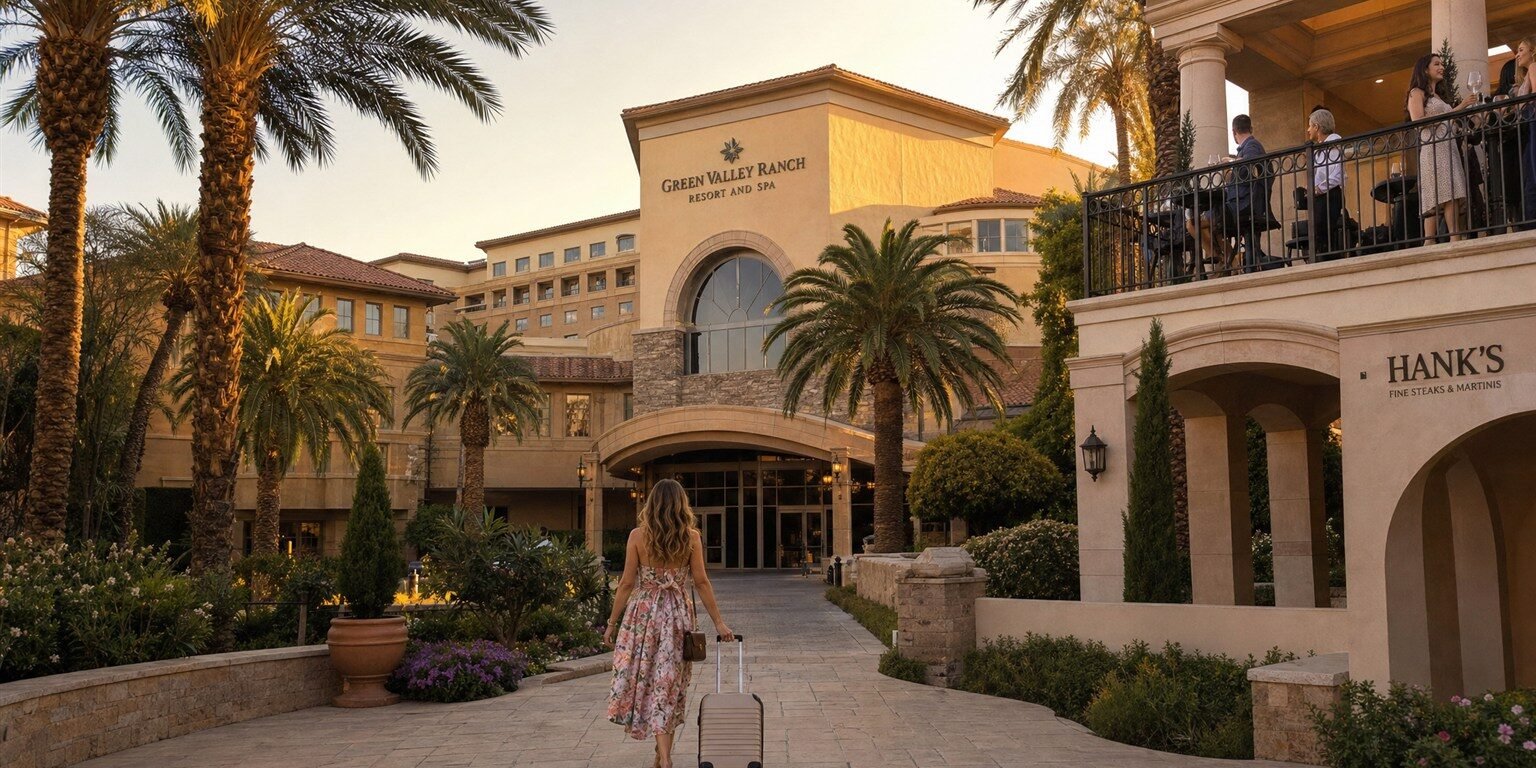
Henderson: Green Valley Ranch is the standout property. Consistently ranked among the safest cities in America. Close to Lake Mead, Hoover Dam, and the trails at Sloan Canyon. Perfect for travelers who plan to spend most of their time exploring outside the city.
Find off-Strip hotel deals on Vegas.com →

So Who Should Actually Stay Off the Strip?
You’ll love it if: You’re a repeat visitor who’s already done the Strip thing. You’re watching your budget closely. You have a rental car. You want peace and quiet. You’re planning day trips to Red Rock, the Grand Canyon, or Hoover Dam. You’re a serious foodie. You’re traveling with kids who don’t need to walk past a nightclub at 11 p.m.
Stick with the Strip if: This is your first Vegas trip and you want the full experience. You’re only in town for two or three nights. Walkable nightlife is a priority. You don’t want to think about transportation. The spectacle IS the vacation for you.
The hybrid approach: Here’s a move more people should consider: split your stay. Book two nights on the Strip to soak in the energy, then move to an off-Strip resort for two or three nights of actual relaxation. You get both experiences, and the contrast makes each one better.

Make It Work: Quick Tips for Off-Strip Stays
Budget for rides. If you don’t have a car, set aside $30 to $50 per day for rideshares. Knowing the number in advance keeps it from feeling like a surprise.
Pick strategically. If you want nightlife, stay near Fremont or just off the Strip. If you want nature, go Summerlin or Henderson. Don’t book Henderson if you plan to be on the Strip every night.
Check surge patterns. Rideshare prices spike Friday and Saturday nights between 10 p.m. and 2 a.m. If you’re heading to the Strip on a weekend, go early and stay late to avoid the worst of it.
Book a property with its own scene. The best off-Strip hotels (Red Rock, Green Valley Ranch, Circa downtown) have enough restaurants, pools, and entertainment that you don’t need to leave every day. Build in a “resort day” where you just enjoy where you’re staying.

The Bottom Line
There’s no wrong answer here. Staying off the Strip isn’t settling for less. For a lot of travelers, it’s the smarter, more interesting, more relaxing way to experience Las Vegas. You eat better, sleep better, spend less, and discover corners of the city that most tourists never see.
But the Strip is the Strip for a reason. That energy, that absurdity, that only-in-Vegas feeling of walking through a casino at 3 a.m. while a cover band plays and someone next to you just won $500 on a slot machine? You can’t fake that. And you shouldn’t feel bad for wanting it.
So forget what the internet tells you that you “should” do. Think about what kind of trip you actually want. Then book accordingly. Vegas will be ready for you either way.
| Detail | Info |
|---|---|
| Average Off-Strip Room Rate | $70 to $120/night |
| Average Strip Room Rate | $150 to $300/night |
| Rideshare Cost to Strip | $15 to $30 each way (varies by distance and time) |
| Strip Parking Fees | $20 to $40/day at most major casinos |
| Off-Strip Parking | Free at most locals’ casinos |
| Top Off-Strip Hotels | Red Rock Resort, Green Valley Ranch, Palms, Rio, Virgin Hotels, Circa (downtown) |
| Best Food Neighborhood | Chinatown / Spring Mountain Road (~150 restaurants) |
| Closest Off-Strip Area to Strip | Palms / Rio area (~1 mile west) |