
The Real Way to Get Free Hotel Room Upgrades in Las Vegas
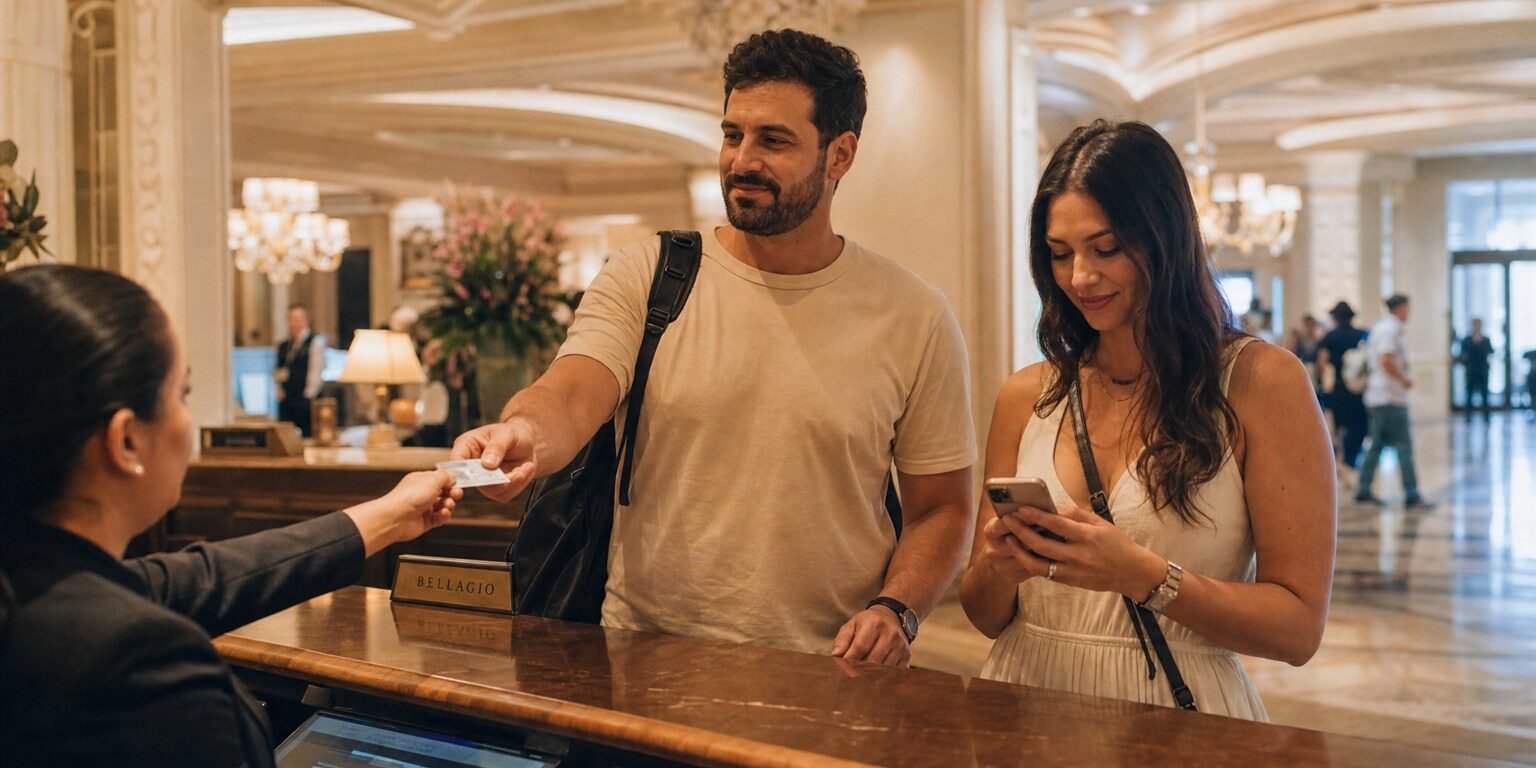
You booked the cheapest room the hotel would let you book. The one described in the listing with words like “standard,” “interior,” and “may face parking garage.” You hand your ID to the woman at the front desk, brace yourself for a key to a room somewhere near the ice machine, and instead she slides you a key packet for a corner suite on the 32nd floor. With a fountain view. At Bellagio prices you did not pay.
This is not a fantasy. This is Tuesday afternoon in Las Vegas, happening to somebody right now while you read this.
Here is the truth nobody selling hotel rooms wants to say out loud: getting a free upgrade in Vegas has almost nothing to do with being rich, flashing cash, or knowing a guy named Vinny. It has everything to do with understanding how a Las Vegas resort actually runs its room inventory, and budget travelers, the ones who booked the cheap rate on purpose, often have a bigger edge than the business traveler paying three times as much.
You just need to know which levers to pull.
Why Vegas Is the Best City in America for Free Hotel Upgrades
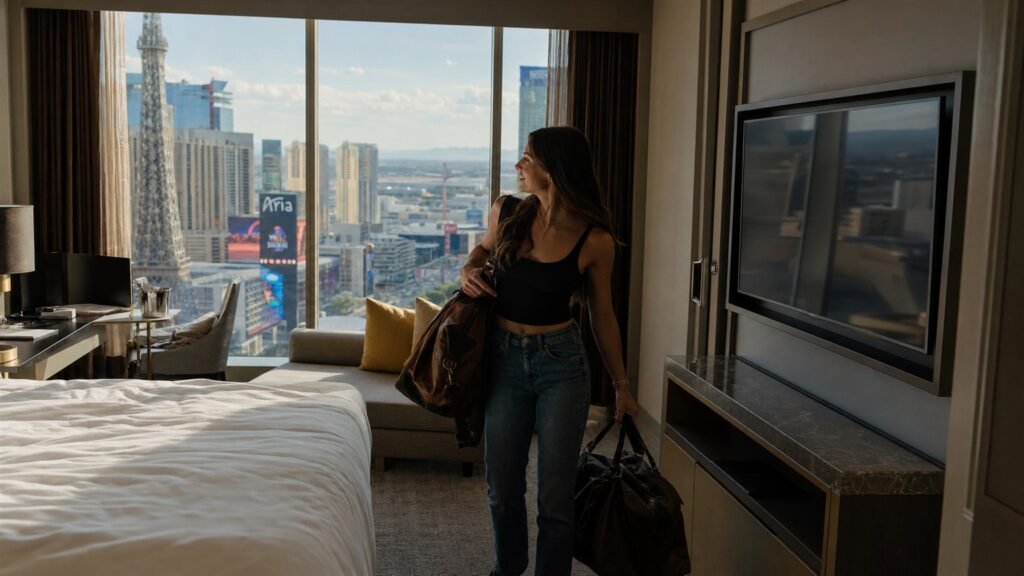
Las Vegas has more than 150,000 hotel rooms, and that is just the Strip. A single resort like MGM Grand has over 6,000 rooms alone. That kind of inventory means something very specific for you: on any given night, there are dozens, sometimes hundreds, of suites sitting empty. Empty suites make the revenue team twitchy.
Empty suites also make front desk agents extremely willing to move a friendly guest into a room that would otherwise be dark.
Compare that to a boutique hotel in Charleston with 42 rooms, where every suite is usually booked six months out. Vegas is built on scale, and scale is your best friend when you want something for free.
Book the Right Way (Your Hotel Upgrade Starts Before You Ever Arrive)
The single biggest mistake budget travelers make is hunting for the absolute rock-bottom rate on a third-party site like Priceline or a deeply prepaid Expedia special. Those rates work great for saving money, but they handcuff the front desk. When your reservation is marked “non-refundable, prepaid, third party,” the agent often cannot touch it without calling a manager and filling out paperwork. Guess how often that happens? Almost never.
Here is what to do instead.
Book directly with the hotel through its own website. The rates are almost always within a few dollars of the third-party sites anyway, and the front desk can modify a direct booking freely. Pick a flexible or fully cancellable rate if your budget allows, because flexible rates are the easiest to move around in the system.
Before you book, spend two minutes joining the hotel’s loyalty program. MGM Rewards, Caesars Rewards, Wynn Rewards, Venetian Grazie, Hilton Honors, Marriott Bonvoy. They are all free. Even the lowest no-status tier of these programs signals to the front desk that you are a returning customer worth taking care of, and your booking will be linked to a profile that accumulates perks over time. Sign up tonight, use the number tomorrow.
The Mid-Week Magic Trick
Saturday in Vegas is a cash machine for hotels. Every Strip resort is running close to 100 percent occupancy, rates double, and the front desk does not have a single suite to spare. Saturday is not your day.
Tuesday and Wednesday are your days.
Mid-week is when Vegas occupancy drops off a cliff. The bachelorette parties have gone home, the conference crowd has not yet arrived, and suddenly that same resort that was bursting on Saturday is sitting at 60 percent. Suites are empty. Tower floors are quiet. The front desk has room to play. A Tuesday arrival on a non-convention week is, without exaggeration, the easiest path to a free upgrade that exists in this city.
The flip side is avoiding conventions. CES in early January, MAGIC in February, World of Concrete, EDC weekend in May, they jam the city and make upgrades almost impossible. Before you book, google the resort name plus “convention calendar” or check the Las Vegas Convention and Visitors Authority website . The slow months reward you with the best chances: mid-January after New Year’s wraps, the brutal heat window of July and August, and the first two weeks of December before the holiday rush.
Quick tip: A Tuesday-Wednesday-Thursday stay during a slow week will almost always beat a Friday-Saturday stay at a nicer hotel, both in price and in the likelihood of waking up in a suite.
The $20 Trick: Does It Still Work in 2026?
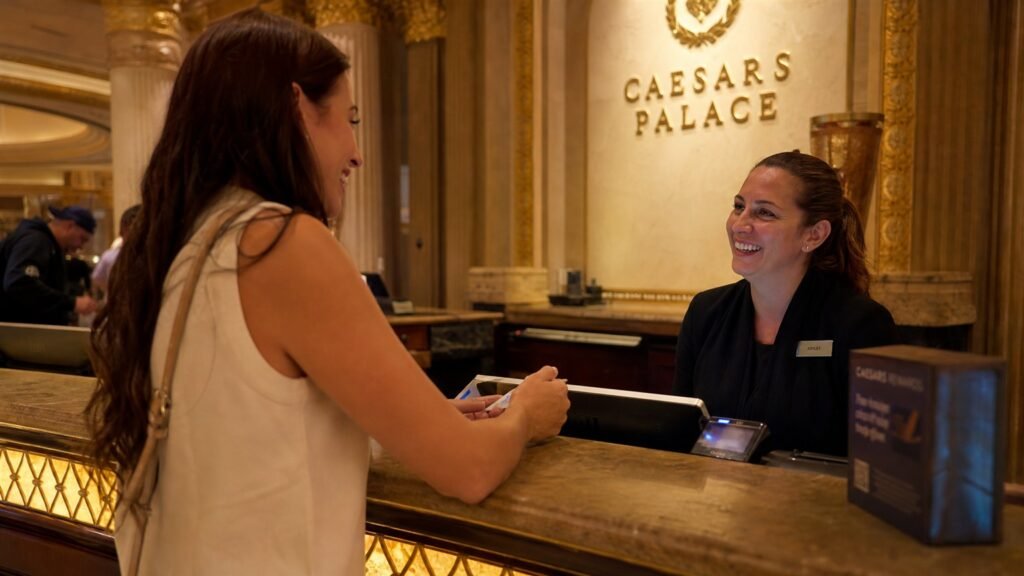
You have probably read about it. You slide a $20 bill between your credit card and your ID, hand it across the counter like you are tipping a maître d’ in a 1962 mob movie, and whisper “any complimentary upgrades available?” The front desk pockets the twenty and slides you a suite key.
Here is the honest take. The twenty-dollar sandwich worked well in the 2000s, it worked okay in the 2010s, and in 2026 it feels awkward for everybody involved. Front desk agents see it coming a mile away. Corporate training at most major resorts now specifically addresses it. And the real secret is that you never needed the twenty in the first place. What actually works is the part that comes after the twenty in the old trick: asking politely for an upgrade.
So skip the cash-in-the-card-sandwich routine. Ask directly, be specific, and be kind. If you get an upgrade, by all means tip the agent openly afterward as a thank you. That feels human. The sandwich trick feels like a scene from a bad sitcom.
The Magic Words at Check-In
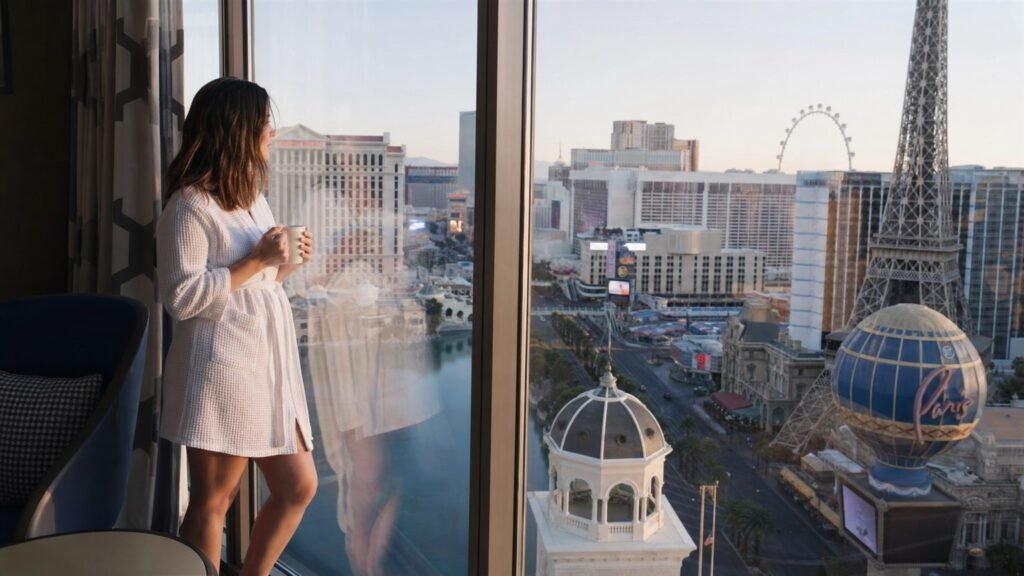
The single most underrated tool you have is the sentence you say out loud at the front desk. Most people mumble something like “just checking in,” hand over an ID, and take whatever they are given. Do not be most people.
Try this instead, word for word if you need to:
“Hi, I am checking in. Before you assign my room, I wanted to ask, by any chance are there any complimentary upgrades available tonight? A higher floor with a Strip view would be amazing if there’s anything open.”
Notice what that does. It is polite. It uses the word “complimentary” so nobody is confused about whether you want to pay. It is specific, which is important because specific requests are easier for the agent to say yes to than vague ones. And it treats the agent like a partner, not a vending machine.
Two more small things matter. First, check in during the late afternoon, roughly 3 to 6 p.m. By then the day’s departures are known, housekeeping has cleaned the available rooms, and the front desk can clearly see what is open.
Check in at 10 a.m. and they have no idea yet. Check in at midnight and the good rooms are already gone. Second, do not use the mobile app check-in or the self-service kiosk if an upgrade matters to you. Robots do not grant suites. People do.
Secret Weapon: The Celebration Angle
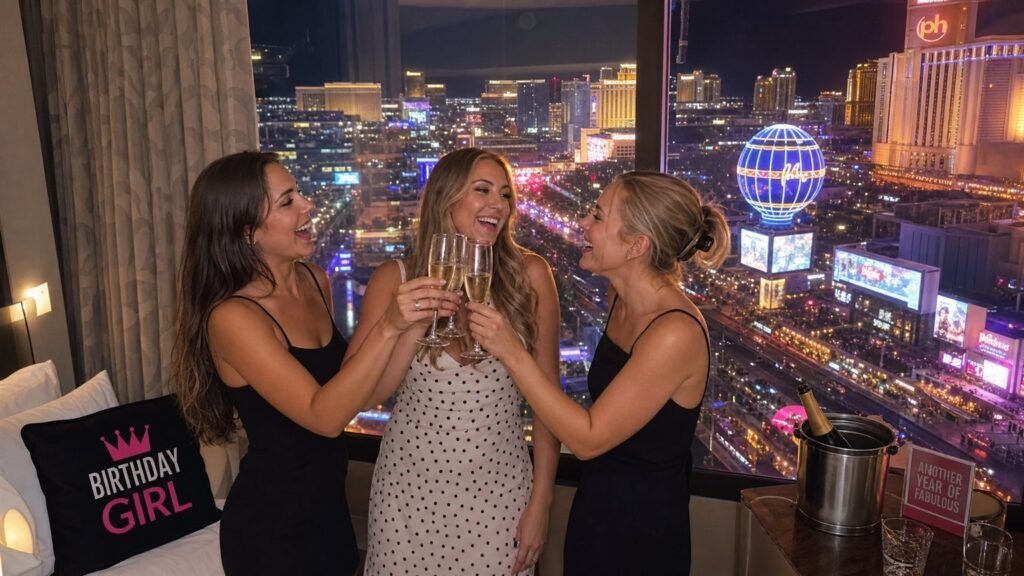
If you are visiting for a birthday, an anniversary, a bachelorette, a honeymoon, a girls’ trip for someone’s 40th, or any real special occasion, say so. Vegas resorts genuinely love celebrations, partly because happy guests spend more on the property and partly because giving a free upgrade to someone celebrating their anniversary is the kind of thing that turns into a five-star review and a loyal customer for life.
Mention it twice. Once when you book, in the special requests box on the reservation page. Once when you check in, casually, not as a demand. “We’re actually here for my mom’s 60th birthday” lands very differently than “I expect an upgrade because it’s my birthday.” The celebration has to be real, but if it is, use it.
Caesars properties, Cosmopolitan, and Wynn have all historically been generous with celebration upgrades . I have personally watched a party of four get moved from a standard room to a two-bedroom suite at Planet Hollywood because one of them mentioned it was a bridal shower weekend. The cost to them was zero. The cost to the hotel was essentially zero too. Everybody won.
Manage Your Expectations (What “Upgrade” Actually Means)
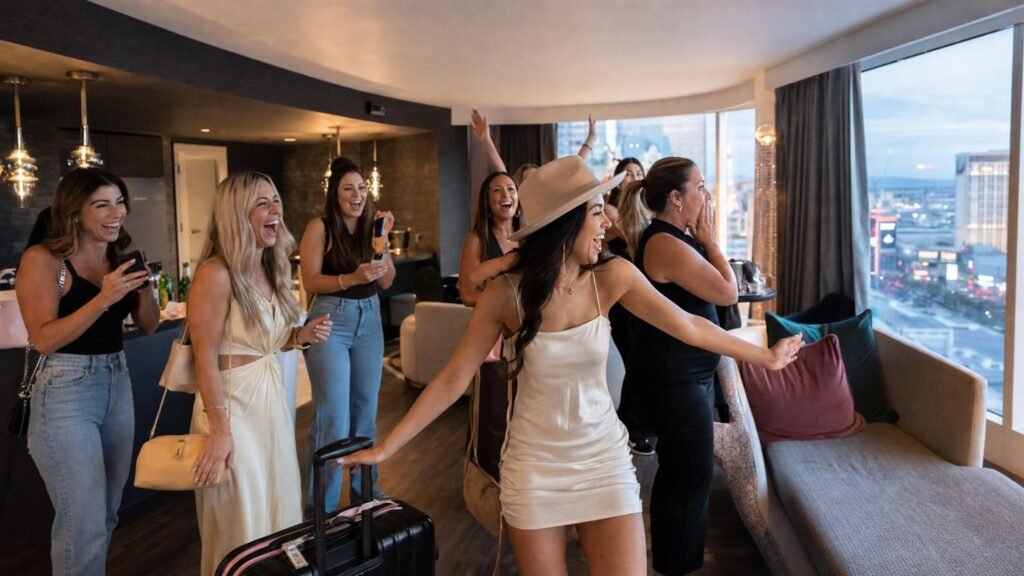
Before you daydream about a penthouse with a private pool, let’s set the table honestly. A free upgrade in Las Vegas usually means one of these things:
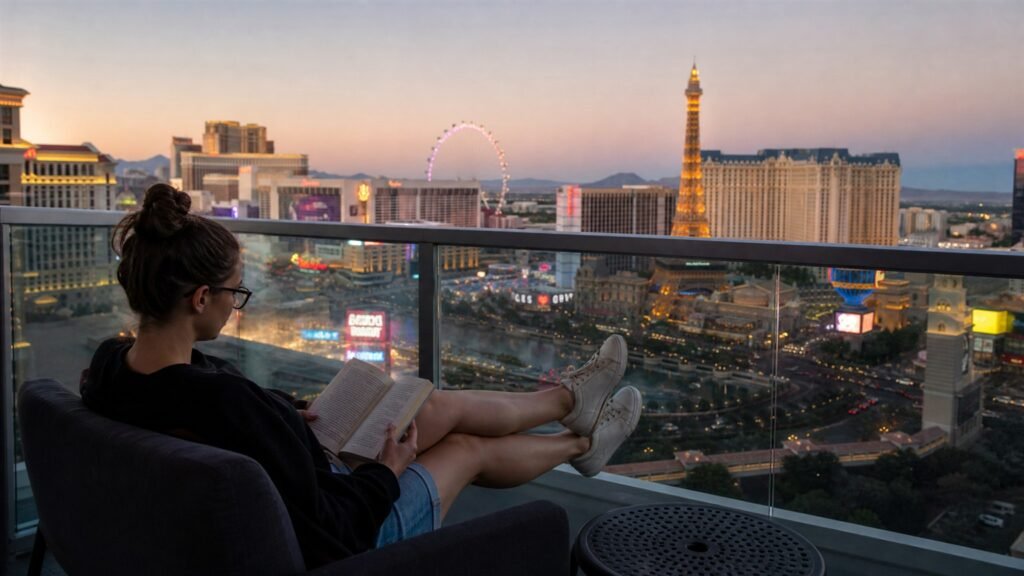
A higher floor with a better view is the most common and probably the most valuable, because a room on the 28th floor with the Strip out the window feels like a totally different vacation than the same room on the 4th floor facing a loading dock.
A room in a newer or recently renovated tower is the next most common; at places like Flamingo and MGM Grand the difference between the tired tower and the refreshed tower is night and day. A corner room with a bigger footprint and two sets of windows happens often and feels like a free suite even when it isn’t.
And yes, sometimes you get an actual suite, a real one, with a living room and a soaking tub. It happens less, but it has happened to me several times.
The point is, any of these is a win. You paid for a standard room and you got something better for free. Do not turn your nose up at a 30th floor Strip view because it is not a penthouse. That is the kind of energy that ensures you never get one.
Costs, Budget Tips, and the Sneaky Resort Fee Reality
The whole point of this game is spending standard-room money and sleeping in a nicer room. So let’s talk real numbers.
A standard mid-week room at a respectable Strip resort, booked during the slow months, runs roughly $60 to $120 a night before fees . That is the base you are paying. An upgrade does not change that number. What it changes is what you get for that number.
A few free tools that amplify your chances: loyalty program sign-up bonuses often come with small perks like a free drink or late checkout that you can stack with an upgrade. Certain travel credit cards include hotel elite status as a perk, which matters more than you might think.
The Hilton Honors Aspire and several Marriott Bonvoy cards include automatic Gold status , and Gold status alone bumps you up the upgrade queue at Strip properties in those families.
Now the bad news, and you knew this was coming. A free upgrade does not eliminate the resort fee. Those $45 to $55 per night resort fees are still tacked onto every Vegas room, upgraded or not. Factor that into your real budget before you celebrate too hard.
Go Get That Upgraded Suite
Here is the whole playbook in one breath. Book directly with the hotel, pick a flexible rate, join the free loyalty program, target a Tuesday or Wednesday in a slow month, check in between 3 and 6 p.m., skip the kiosk, walk up to a human, mention your real celebration if you have one, and politely ask for a complimentary upgrade with a specific request in mind.
That is it. That is the entire secret. No cash sandwich, no sneaky hustle, no insider connection. Just the understanding that Vegas has more rooms than it can always fill, that front desk agents are human beings who enjoy making someone’s day when they can, and that a polite, specific, well-prepared guest is somebody they want to help.
You booked the cheap room on purpose. Now go claim the nice one.
Quick Reference: Your Vegas Upgrade Cheat Sheet
| Factor | What Works Best |
|---|---|
| Best days to arrive | Tuesday, Wednesday |
| Best months | Mid-January, July, August, first half of December |
| Worst times | CES week, EDC weekend, New Year’s, Super Bowl |
| Best check-in time | 3:00 p.m. to 6:00 p.m. |
| Booking channel | Direct on hotel website |
| Rate type | Flexible or cancellable |
| Must-do before arrival | Join free loyalty program, add celebration note |
| Upgrade-friendly resorts | Caesars Palace, Planet Hollywood, Cosmopolitan, Palazzo, Wynn [VERIFY] |
| Tougher upgrades | Aria, Bellagio, MGM Grand during peak weekends |
| What to say | “Are there any complimentary upgrades available tonight?” |
| What NOT to do | Use the kiosk, slide a $20 between your cards, demand anything |