
You found a killer hotel deal. $89 a night on the Strip, and you’re already mentally high-fiving yourself while picking out pool outfits. Four nights, maybe $360 total for the room. Not bad for Vegas, right?
Then you check out. The bill says $743.
Resort fees. Parking. That bottle of water you grabbed off the nightstand at 2 a.m. because you were dehydrated from the desert air (and okay, maybe one too many margaritas). Suddenly your “budget” trip has a credit card bill that haunts you well past your tan line fading.
Here’s the thing: Vegas isn’t trying to hide these fees. It’s just counting on you not paying attention until it’s too late. But you’re smarter than that now, because this guide breaks down every sneaky charge lurking in your Vegas trip and exactly how to sidestep each one.
Resort Fees: The $50/Night Surprise Nobody Warned You About
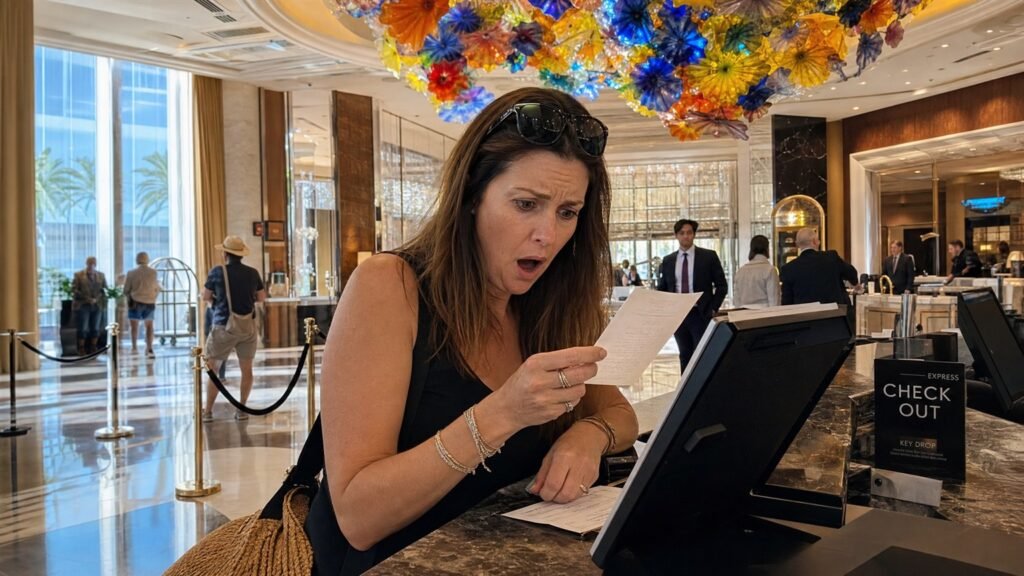
Let’s start with the big one. Resort fees are mandatory daily charges slapped on top of your quoted room rate at nearly every hotel in Las Vegas. They currently range from $35 to $55 per night before tax. After Nevada’s 13.38% tax kicks in, you’re looking at $40 to $62 per night in charges that weren’t part of that flashy “$89/night!” advertisement that got you excited in the first place.
The luxury properties are the worst offenders. Bellagio, ARIA, Wynn, Encore, the Venetian, Fontainebleau, and Caesars Palace all charge $55 per night before tax. That’s an extra $62.36 per night after tax, which means your four-night stay just got $250 more expensive for… Wi-Fi and gym access. Things you’d reasonably expect to be included when you’re already paying hundreds per night for a room.
Now, the good news. The FTC’s pricing transparency rule that took effect in 2025 means hotels now have to show you the total price upfront when you book. You won’t get ambushed at checkout anymore. But the fees still exist. They just stare you in the face earlier in the process.
How to dodge them: A handful of properties charge zero resort fees. Four Queens and Binion’s on Fremont Street, Casino Royale on the Strip, and a few others skip them entirely. Downtown hotels in general charge significantly less ($15 to $25 or nothing at all). If you’re loyal to a hotel brand, check whether your status level waives resort fees, because several loyalty programs offer this perk at higher tiers.
The math that hurts: A $99/night Strip hotel with a $55 resort fee + 13.38% tax on that fee = $161.35/night actual cost. Over four nights, you’re paying $250 in resort fees alone. That’s a nice dinner for two you just lost.

Parking Fees: When Did Leaving Your Car Become a Luxury?
Remember when parking in Las Vegas was free? That era ended years ago, and now most major Strip resorts charge $20 to $25 per day for self-parking. Valet runs $40 to $50. Weekends are pricier than weekdays at most properties, because of course they are.
Do the math on a four-night stay: $80 to $100 just for the privilege of storing your car in a concrete garage. If you drove to Vegas thinking you’d save on airfare, those parking fees are eating into your savings fast.
How to dodge them: Casino Royale offers free self-parking right on the Strip. Treasure Island gives it to players club members (signing up is free and takes two minutes). Several Downtown hotels include free parking. If you’re staying at an expensive Strip property, consider parking at a free location and walking or taking the free tram that connects several resorts. Better yet, if you flew in, skip the rental car entirely. The Las Vegas Monorail, ride-shares, and the free trams between connected properties can handle most of your transportation for a fraction of what you’d spend on parking plus gas.
The Casino ATM Shakedown
You’re on a hot streak at the blackjack table (or at least you think you are at midnight) and you need more cash. The ATM is right there, glowing like a beacon. Convenient? Absolutely. Affordable? Not even close.
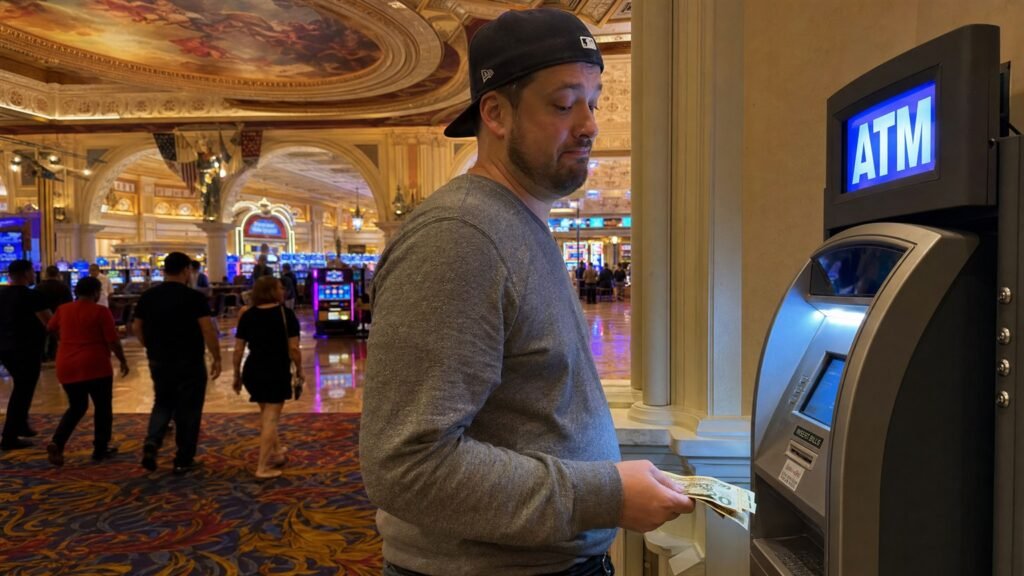
Casino ATMs on the Strip charge $6 to $12 per transaction just in fees. And that’s for a standard debit withdrawal. If you’re using a credit card for a cash advance, you’re paying the ATM fee plus your bank’s cash advance fee plus immediate interest charges with no grace period. Some visitors have reported total fees exceeding $95 on a single transaction when cash advance rates compound.
How to dodge them: Bring the cash you plan to spend on gambling before you leave your hotel. If you need more, CVS, Walgreens, and grocery stores off the Strip have bank-connected ATMs with $2 to $3 fees (still annoying, but dramatically less painful). You can also get cash back with a debit purchase at convenience stores for zero ATM fees. And honestly? If you need to hit an ATM at 2 a.m. inside a casino, that’s the universe telling you to call it a night.

Minibar Mayhem and In-Room Charges
The hotel minibar exists to exploit your weakest moments. You stumble in at midnight, you’re thirsty, and that little bottle of water is sitting right there on the desk looking so innocent. That’ll be $12 to $22, depending on the property. A single can of Coke from a minibar at some luxury hotels runs $13.
But here’s the truly evil part: many Vegas hotels now use sensor-equipped minibars. Move an item, even if you’re just rearranging things to make space for your own snacks, and the room automatically charges you. The charge hits your folio instantly, and disputing it at checkout is a headache nobody wants on their last morning of vacation.
Beyond the minibar, watch for early check-in fees ($50 or more), late checkout fees, and charges for items you assumed were complimentary (that coffee pod setup on the desk might not be free).
How to dodge them: Rule number one: don’t touch anything in the minibar. Not even to look. Bring your own drinks and snacks from a CVS or Walgreens (there are several right on the Strip). For early check-in, ask politely at the front desk. Loyalty program members often get it free, and even without status, a friendly ask when your room happens to be ready costs nothing. Same with late checkout: ask at check-in, not at 11:45 a.m. when you’re scrambling.

Restaurants, Bars, and the Automatic Gratuity Trap
Vegas restaurants have quietly made automatic gratuity the norm, not the exception. An 18 to 20% service charge gets added to your bill at most sit-down restaurants, pool bars, and dayclubs. It’s often printed in tiny text at the bottom of the receipt where you’d never notice unless you’re looking for it.
Here’s where it gets expensive: the receipt still has a blank tip line above the total. You, being a generous human who appreciates good service, write in another 20%. You just tipped 40% without realizing it. This happens to people constantly in Vegas, and servers aren’t always volunteering the information.
On top of that, some venues add a “service charge” or “venue fee” that looks like a gratuity but actually goes to the house, not your server. So your server gets nothing from that line item, and you think you’ve already tipped.
Pool bars and dayclubs are the worst for this. A $25 cocktail with an 18% auto-gratuity brings it to $29.50, and if you accidentally double-tip, you’re at $34.50 for a single drink. Multiply that by a day at the pool and your bar tab is genuinely shocking.
How to dodge them: Read every receipt before signing. Look at the bottom for “gratuity included,” “service charge,” or “auto-grat.” Ask your server directly: “Is tip included?” No shame in that question. And for meals in general, eat at least one meal a day off the Strip at a locals’ favorite. You’ll pay 30 to 50% less for food that’s often better than the tourist-priced Strip restaurants.
Nightclub and Dayclub Fees That Add Up Absurdly Fast
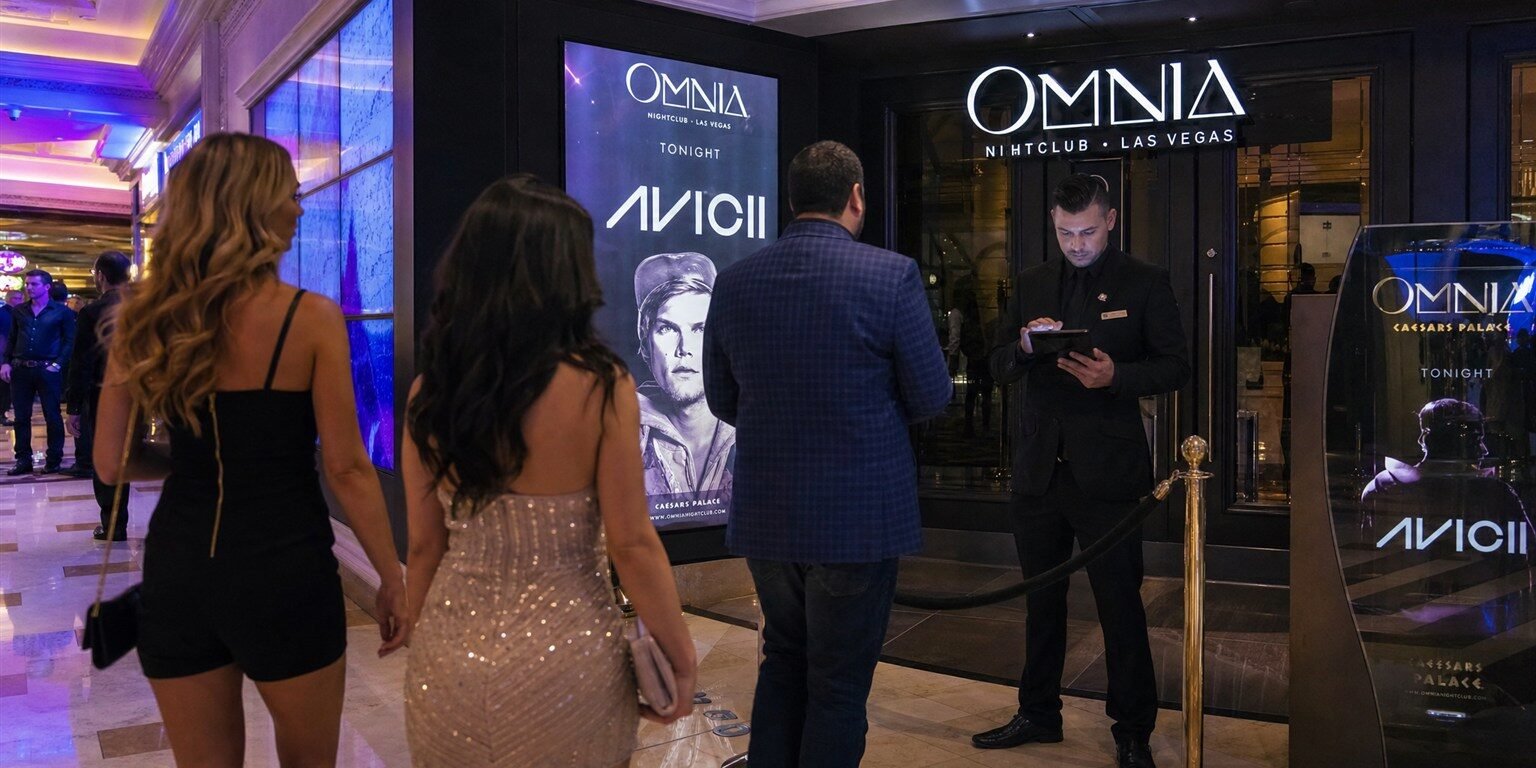
Planning a big night out? The sticker shock starts at the door. Cover charges run $20 to $60 for men and $10 to $30 for women, with prices spiking on holiday weekends, special events, and anytime a big-name DJ is performing.
If you’re considering bottle service, brace yourself. The bottle price is just the beginning. On top of your table minimum (starting around $1,000 to $1,500 for entry-level spots), you’ll pay sales tax (8.375%), a venue fee (often around 12.75%), and automatic gratuity (20%). That 37% surcharge means a $1,000 table actually costs $1,370. A $500 bottle of vodka becomes $685. Nobody mentions these add-ons when they quote you a price.
How to dodge them: Guest lists are your best friend. Most Vegas nightclubs offer free entry (especially for women, and sometimes couples) if you sign up on the guest list before a certain time, usually before midnight. Search for the club’s official guest list or download nightlife apps that connect you directly. Promoters on Instagram and at hotels also hand out free passes. You’ll never eliminate the drink markup inside, but at least you won’t pay $60 just to walk through the door.

The Nickel-and-Dime Fees You Won’t See Coming
Beyond the big-ticket charges, Vegas is full of smaller fees that bleed your wallet slowly:
Show tickets: That $89 Cirque du Soleil ticket becomes $108 after Ticketmaster convenience fees, facility charges, and service fees. Buy at the box office when possible to skip most of these.
Wi-Fi upgrades: Your resort fee “includes” Wi-Fi, but it’s often the basic tier. Want speeds fast enough to actually video-call home or stream something? That’s another $15 to $20 per day for “premium” access.
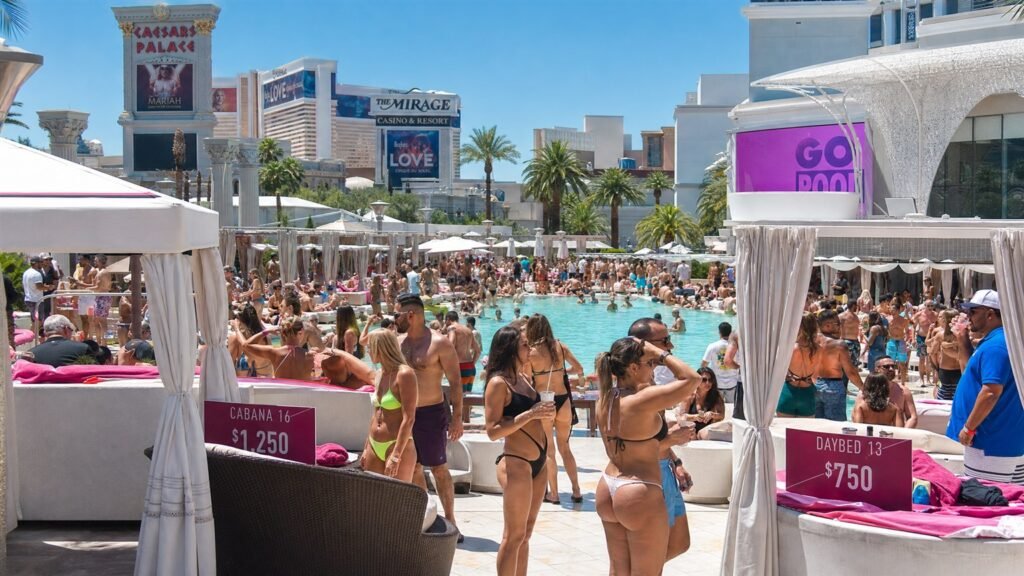
Pool cabanas and daybeds: That Instagram-worthy cabana by the pool? $200 to $500+ per day at most Strip properties. Daybeds are slightly less but still start around $100 to $150. You can use the pool for free (resort fee covers that), so unless you desperately need shade and bottle service, skip the rental.
Luggage storage: Checking out at 11 a.m. but your flight isn’t until 8 p.m.? Most hotels store luggage free at the bell desk, but some newer properties have started charging $5 to $10 per bag.
The Strip “free” hustle: Those guys in costumes, the “free” CD artists, the bracelet sellers. Nothing is free. If someone puts something in your hand on the Las Vegas Strip, they will demand money. Politely decline, keep walking, don’t make eye contact.

Your No-Fee Vegas Game Plan
Here’s your cheat sheet for keeping more money where it belongs (your pocket, or at least spent on things you actually enjoy):
- Book a no-fee or low-fee hotel. Downtown properties or Strip outliers like Casino Royale save you $40 to $62 per night instantly.
- Skip the rental car. Between free trams, the Monorail, and ride-shares, you don’t need one, and you definitely don’t need a $25/day parking charge.
- Bring cash from home. Decide your gambling budget beforehand. Leave the ATM alone.
- Stock up at a drugstore. Water, snacks, sunscreen. Buy them at Strip-adjacent CVS or Walgreens, not from your hotel.
- Read every receipt. Look for auto-gratuity before adding your own tip.
- Get on guest lists early. Free nightclub entry is real and easy to get.
- Buy show tickets at the box office. Or check same-day discount ticket booths on the Strip.
A savvy traveler following this playbook saves $500 to $800 over a four-night trip compared to someone who walks in unprepared. That’s not an exaggeration. That’s resort fees ($250) + parking ($100) + ATM fees ($30) + minibar incidents ($50) + double-tipping ($60) + nightclub covers ($80) that you simply don’t pay.
Vegas is absolutely worth the trip. The energy, the food, the shows, the sheer ridiculousness of it all. You just have to play the game smarter than the house wants you to. And now you know exactly how to do that. Go book your trip. Just read the fine print this time.
Browse Discounted Las Vegas Show Tickets on Vegas.com →
Find Downtown Las Vegas Hotel Deals on Booking.com →
Book Casino Royale (No Resort Fee, Free Parking) on Expedia →