Your Complete Mt Charleston Day Trip Guide From Las Vegas
You have been in Las Vegas for three glorious days, and now you are standing outside your hotel at 10am wondering if the sidewalk is actually on fire. Your phone says 112 degrees and the pool is occupied by roughly the entire population of a mid-sized European country.
My friend, this is the part of the Vegas vacation nobody put in the brochure. But here is the secret that Las Vegas locals have been quietly keeping to themselves: there is a mountain 45 minutes from the Strip where the temperature right now, at this very moment, is a breezy 75 degrees.
There are pine trees up there. Actual pine trees, waving in the breeze, making that sound pine trees make when the wind moves through them. There is shade. There are hiking trails. There is a chairlift that floats you over a forest for ten bucks. There is coffee that does not cost seventeen dollars.
That mountain is Mt. Charleston, and it might just be the best day trip you take on your entire Las Vegas vacation. The only downside is that once you go up there and breathe real air for a few hours, coming back down to the Strip feels like voluntarily re-entering from outer space. Worth it anyway. Here is everything you need to know.
Wait, Las Vegas Has a Mountain?
It does, and a proper one at that. Charleston Peak punches up to 11,916 feet above sea level, making it the eighth-highest peak in Nevada and the most topographically prominent mountain in the entire state. To put that in perspective, it is more than two miles high. The Strip sits at about 2,000 feet. The mountain is winning this comparison by a lot.
Mt. Charleston sits about 35 miles northwest of the Strip, tucked inside the Humboldt-Toiyabe National Forest, which happens to be the largest national forest in the lower 48 states. Vegas always has to go bigger.
The mountain also has pine forests, aspen groves, resident deer and wild horses. It is genuinely remarkable, and it is less than an hour from a casino that serves free drinks while you lose money. The contrast is almost physically disorienting.
Two main roads take you up there, both branching off US-95 North. Kyle Canyon Road (Nevada State Route 157) is your path to the main village, the Visitor Gateway, restaurants, lodging, and most of the hiking trailheads. Lee Canyon Road (Nevada State Route 156) takes you to the ski resort, which runs a full summer season and offers way more fun than anyone expects from a ski resort in July.
Both roads are worth your time and both will make you feel like you have accidentally driven into a different state.
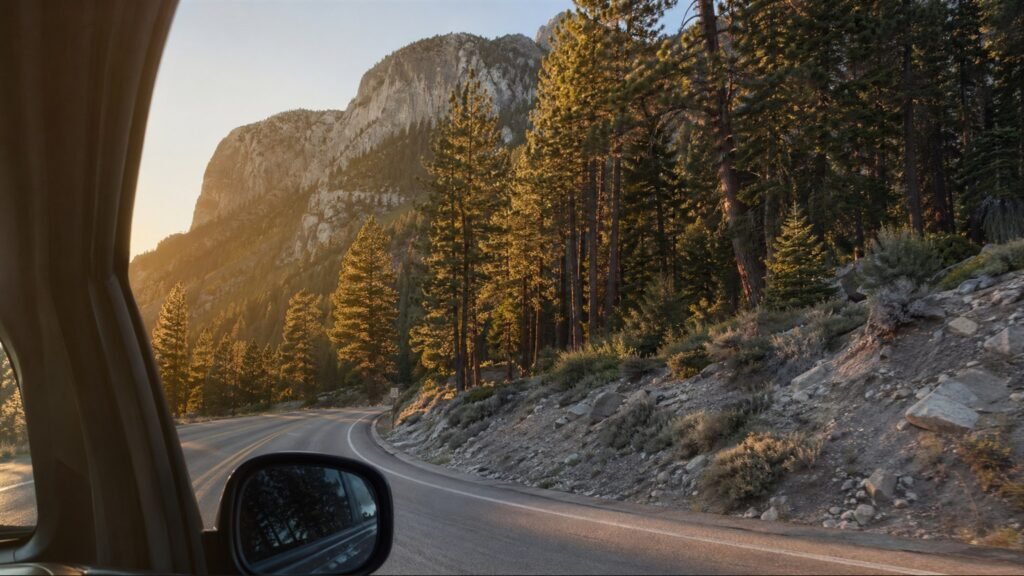
The Most Satisfying Drive You Will Take All Trip
Temperatures drop about 5 degrees for every 1,000 feet of elevation gain. The Las Vegas Strip is at roughly 2,000 feet. Charleston Peak tops out near 12,000 feet. That is a 10,000-foot difference, which means the summit can be a jaw-dropping 50 degrees cooler than whatever circle of the sun you left behind on the Strip.
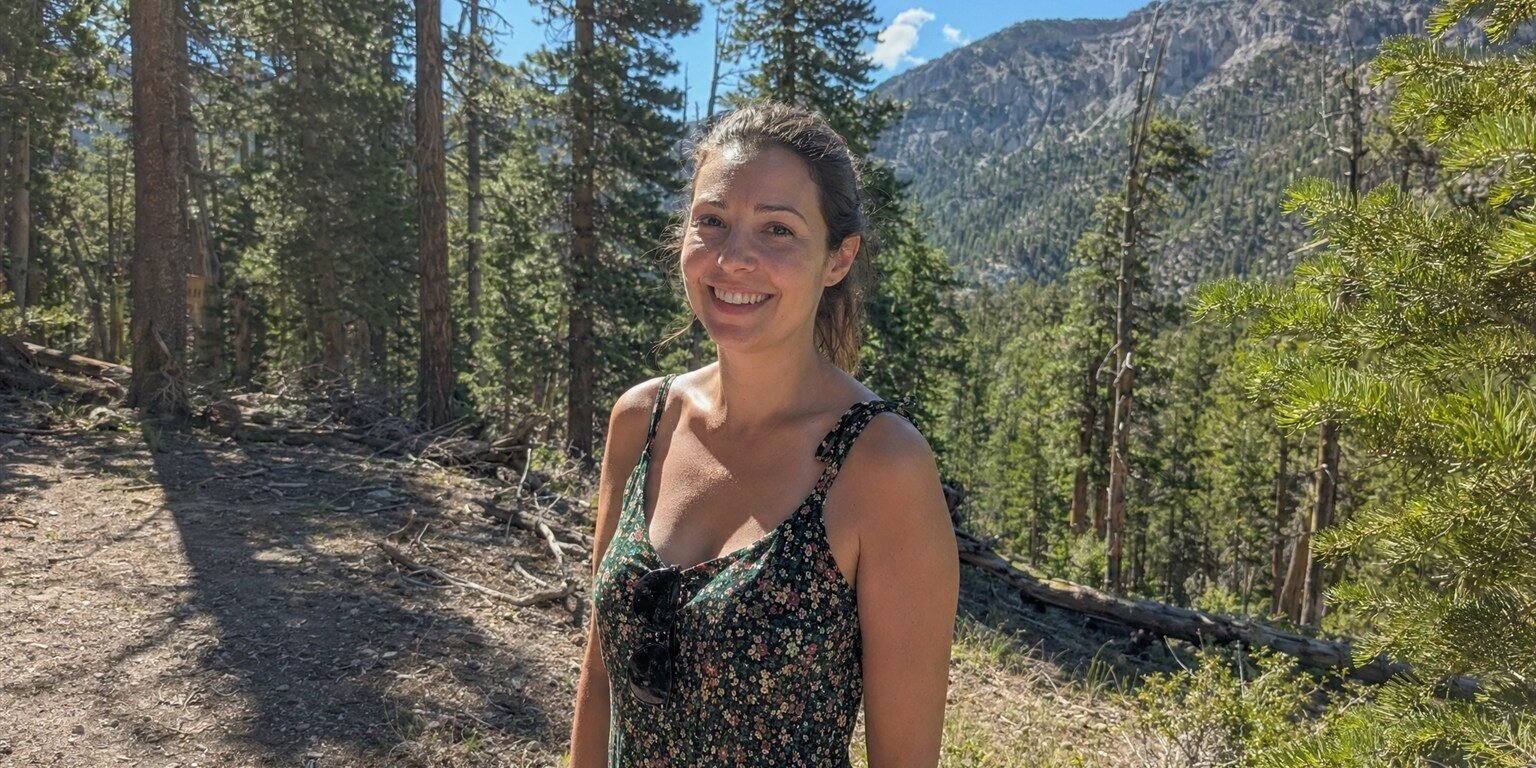
But you do not even need to summit to feel the full magic. The village area and hiking trailheads sit between 6,000 and 8,000 feet, which puts them squarely in the mid-70s to low-80s on a scorching summer day. The same afternoon that is melting your flip-flops at 110 degrees on the Strip, it is 76 degrees and breezy under the pines at the Visitor Gateway. It is one of the best free gifts Southern Nevada has to offer.
A quick heads-up on summer weather up there: July and August bring afternoon monsoon thunderstorms that are both spectacular and serious. The mountains pull moisture up from the Gulf of Mexico and turn it into dramatic afternoon shows complete with lightning and real, actual rain, which is apparently a thing that can fall from the sky.
If you are hiking, go early and be off any exposed ridges well before noon. The storms build fast, and the mountain does not care about your itinerary. June is the driest and most consistently gorgeous month to visit. September is a sleeper hit: crowds thin out, the aspen trees start their turn toward gold, and the whole mountain takes on a quieter, more magical quality.
Check the weather before you go: mtcharlestonweather.com
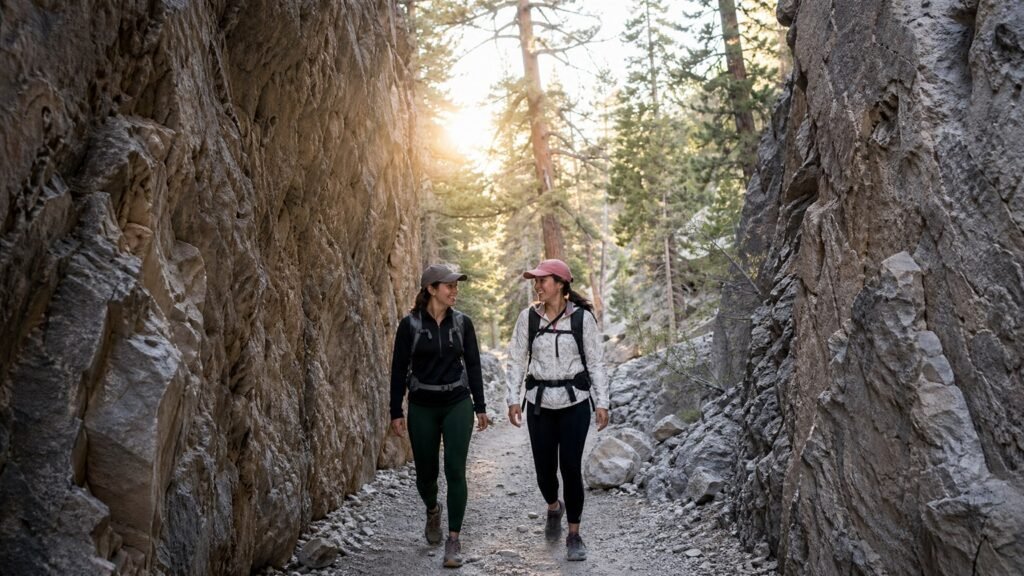
Hiking the Mt. Charleston Trails: The Good and Bad News
Let us start with the honest news, because you deserve to know before you drive up. Tropical Storm Hilary swept through in August 2023 and did genuinely catastrophic damage to several of the mountain’s most beloved hiking trails. We are talking trenches ten to fifteen feet deep where trails used to be.
The Mary Jane Falls Trail, one of the all-time favorites, is closed and will not reopen until at least fall 2027 while the Forest Service completes a full trail reroute and construction project. The Upper Bristlecone Trail and Trail Canyon Trail also remain closed. These were hugely popular trails, and their absence is a real bummer.
Now the good news: the mountain has over 60 miles of other trails, and plenty of excellent hiking is still very much open and waiting for you. Cathedral Rock Trail recently reopened after its own closure, and several other trails are accessible, beautiful, and far less crowded than they used to be, precisely because the crowds have not fully returned yet.
Always, always check current conditions at gomtcharleston.com before you visit. Trail status can change as repairs progress, and you want to know before you are standing at a trailhead with hiking boots on and nowhere to go.
Trail Status for Summer 2026 – Check Before You Go!
CLOSED (do not attempt): Mary Jane Falls and Trail Canyon Trailheads and Trails, Cathedral Rock Trail, Echo Road and Powerline Access Road
OPEN: Little Falls Trail (via Cathedral Rock Trailhead), South Loop Trail (via Cathedral Rock Trailhead), Lower Bristlecone Trail (partial out-and-back only), Fletcher Canyon Trail, Robber’s Roost Trail
Current conditions and closures: gomtcharleston.com/current-condition-closures
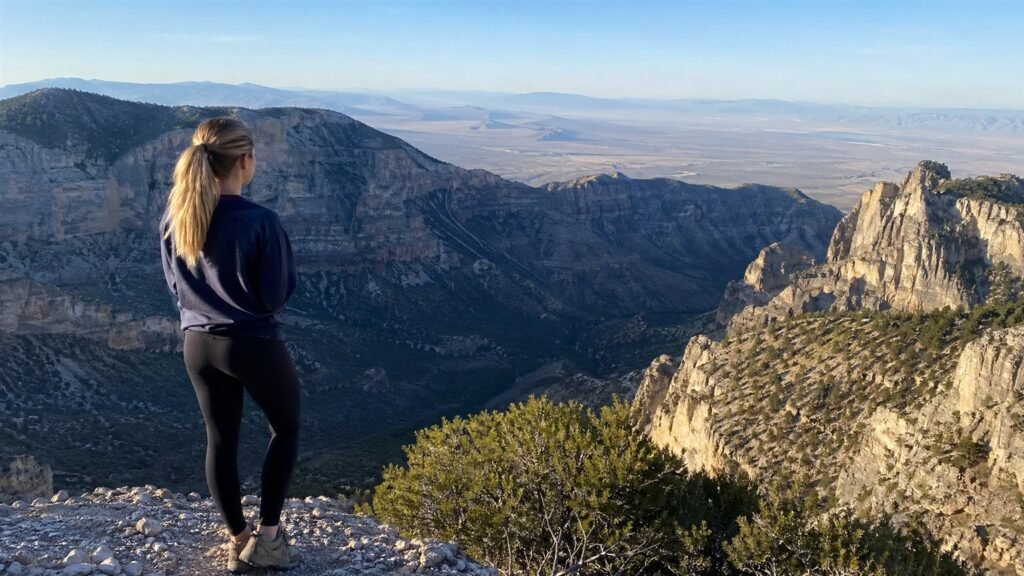
Here is a tour of the trails worth lacing up for this summer:
Fletcher Canyon Trail deserves way more attention than it gets. This trail winds through a narrow, high-walled canyon that feels like the mountain built its own private hallway. The walls block the sun, the shade is legitimately cool, and the whole thing has the quiet drama of a slot canyon without requiring you to stand in 106-degree desert to enjoy it.
Moderate difficulty, family-friendly, and deeply satisfying. This is the trail you show people when you want them to understand what the fuss is about.
Little Falls Trail is the move if you want a scenic stroll without committing to a serious hike. Accessible from the Cathedral Rock Trailhead, it leads to a rocky creek area that feels like a completely different planet from the one you were on this morning. Great for first-timers, kids, or anyone whose legs are still recovering from yesterday’s walking-the-Strip marathon.
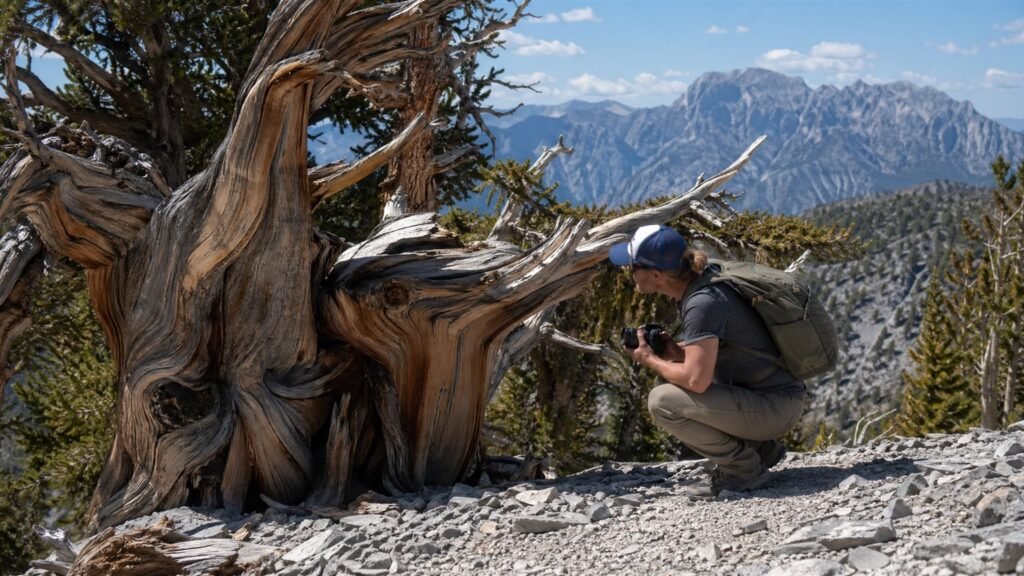
Lower Bristlecone Trail takes you to some of the most ancient living things on the planet. The bristlecone pines clinging to these rocky slopes are up to 3,000 years old. To put that in context: some of these trees were already established when ancient Rome was in its early days.
They survived the rise and fall of entire civilizations by essentially being so gnarly and stubborn that nothing could kill them. Only the lower portion of the trail is currently open as an out-and-back, but those trees alone justify the trip.
South Loop Trail is for the genuinely ambitious. This 18-mile round-trip route climbs to Charleston Peak itself, gaining about 4,000 feet of elevation along the way. If you are fit, well-prepared, and leave before sunrise, it is one of the most spectacular hiking days available anywhere in the American Southwest. If you are not sure whether you are fit and well-prepared for 18 miles of mountain hiking, this trail will answer that question definitively.
Universal summer hiking rules for Mt. Charleston: go early, bring more water than seems necessary (altitude dehydrates you faster than you expect), wear sunscreen, and pack a light jacket because it will be cooler than your Las Vegas brain is prepared for. Afternoon thunderstorms in July and August are not occasional surprises. They are basically scheduled events. Plan accordingly.
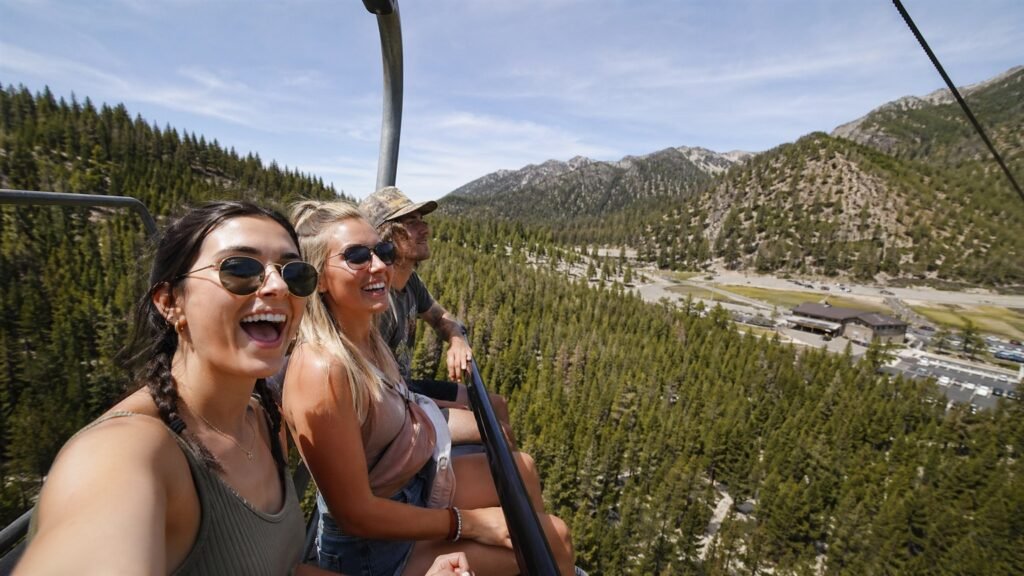
Lee Canyon: The Ski Resort Having a Fantastic Summer Identity Crisis
Here is something that would surprise most Vegas visitors: there is a functioning ski resort about 47 miles from the Strip, and in the summer it turns into one of the most entertaining and undervisited half-day adventures in Southern Nevada. Lee Canyon opens for its summer season in late May and runs through September, and the vibe is somewhere between outdoor adventure park and genuinely great mountain hangout.
Scenic Chairlift Rides: For $10 per adult ($6 for ages 6-17, free for kids 5 and under), you ride the chairlift up to 9,370 feet and float over a pine forest with panoramic views of the Spring Mountains spread out around you. It is slow, peaceful, and gives you the sensation of hovering over a landscape that does not have a single buffet in it anywhere.
This is not something the casino can offer, and the price difference is also somewhat staggering. Tickets are purchased in person only, no online sales, and the chairs run daily from 10am to 6pm.
Disc Golf: An 18-hole disc golf course winds through some of the resort’s most spectacular terrain, and your chairlift ticket gets you to the upper tees off the Sherwood run. Course maps, scorecards, and disc rentals are available at the Summer Activities Tent near the base. No experience required.
The skill level needed to enjoy mountain disc golf is simply: be a person who wants to walk through a pine forest while occasionally throwing a disc at a basket. That is genuinely the whole requirement.
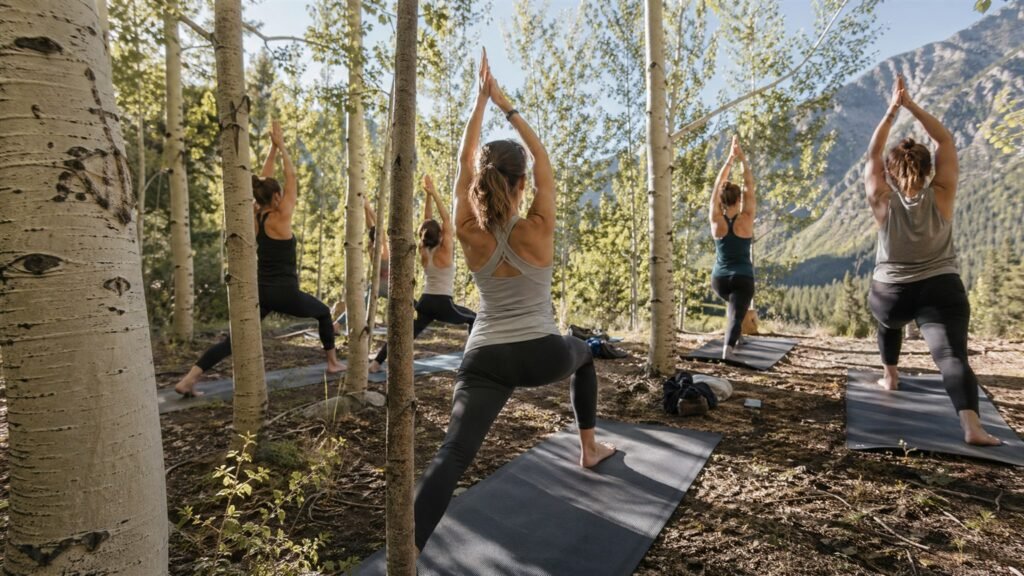
Mountainside Yoga: Every Sunday and Friday at 10am through the end of September, Lee Canyon hosts free outdoor yoga at Aspen Grove near the Hillside Lodge. Bring your own mat. It is open to all levels, runs about an hour, and takes place at 8,500 feet in fresh mountain air.
This is the best reason to be awake before 10am in Las Vegas that does not involve a gambling strategy. It is free. It is beautiful. It is the kind of thing you will describe to your friends back home and they will not quite believe.
Youth Adventure Days: Running every Friday through August 16, 2025 (skip June 28), this program for kids ages 7-12 runs from 9:30am to noon for $49 per child. Guided hikes, wildlife and plant identification, archery, disc golf, Leave No Trace education, and a scenic chairlift ride are all included.
While the kids are occupied learning to identify wildlife and shoot arrows, parents can explore the trails independently or settle into the Bighorn Grill with a cold drink and approximately zero guilt.
Bighorn Grill and Brewin’ Burro Coffee Shop: Lee Canyon has an on-site restaurant and coffee shop that operate with a refreshing lack of resort pricing insanity. Food from 11am to 6pm at the Bighorn, coffee and snacks at the Burro whenever you need them. Eat here before or after your adventures. You will feel morally superior to your hotel breakfast.
The Spring Mountains Visitor Gateway: Start Here, Thank Us Later
If there is one thing to do before you launch into any activity on the mountain, it is stopping at the Spring Mountains Visitor Gateway. Do not skip this. It will take 20 minutes, cost you nothing, and make everything else you do up there more interesting and meaningful.
The Visitor Gateway sits on 128 acres of former golf course land in Kyle Canyon, which is a very Southern Nevada origin story if there ever was one. The complex features interpretive exhibits on the Southern Paiute people, who have called this mountain sacred for generations, and a thoughtfully designed Seven Stones Plaza that serves as a genuine cultural tribute rather than a plaque nobody reads.
Then there is the Silent Heroes of the Cold War Memorial, which honors the victims of a 1955 military plane crash on Charleston Peak. It is understated and genuinely moving, sitting in this peaceful mountain setting. Most people walk up expecting a monument and end up standing there longer than they planned.
The Visitor Gateway is free. It is open seven days a week from 9am to 4pm. Rangers run programs and events throughout the summer that are absolutely worth checking on at gomtcharleston.com before your visit. The picnic areas are excellent, the accessible trails are genuinely lovely, and this is the ideal starting point if you are visiting with family members who have different mobility levels.
It also has restrooms, which you will appreciate more than any other amenity on the mountain after a 45-minute drive up from the Strip.
Eating, Drinking, and Actually Sleeping on the Mountain
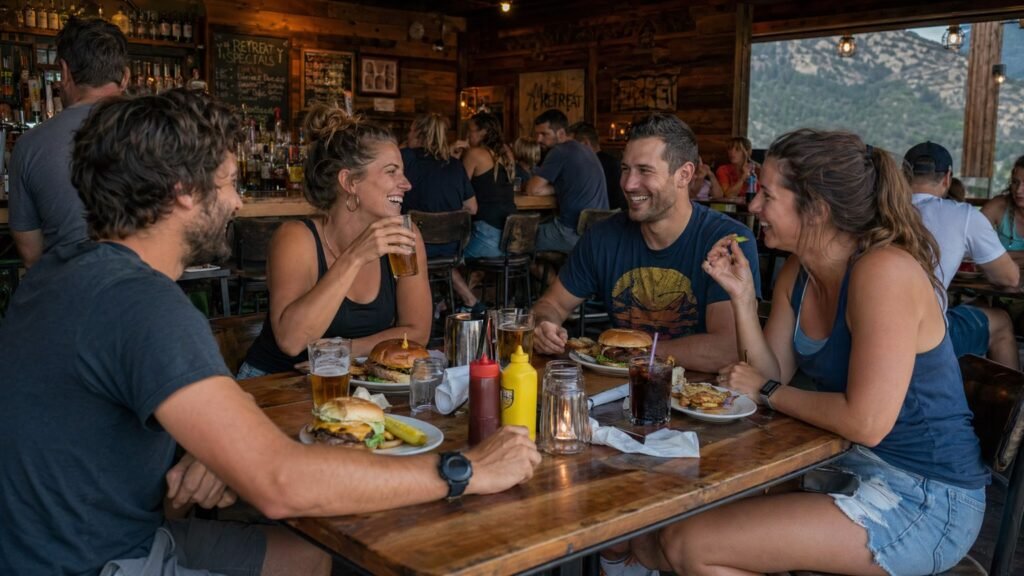
The Retreat on Charleston Peak sits at 6,700 feet in Kyle Canyon and is the mountain’s main destination for food, drinks, and lodging. The Canyon Restaurant serves breakfast from 8am and keeps a cafe running with fresh baked goods and coffee 24 hours a day, which makes it the only place on the mountain you can get coffee at 3am.
Lunch and dinner bring burgers and American comfort food with views of Kyle Canyon that no interior decorator could replicate. The bar has a pool table, TVs, and drinks priced at what reasonable human beings would consider reasonable prices, rather than at what the Strip considers reasonable prices.
No dress code. Dogs on leashes are welcome outside.
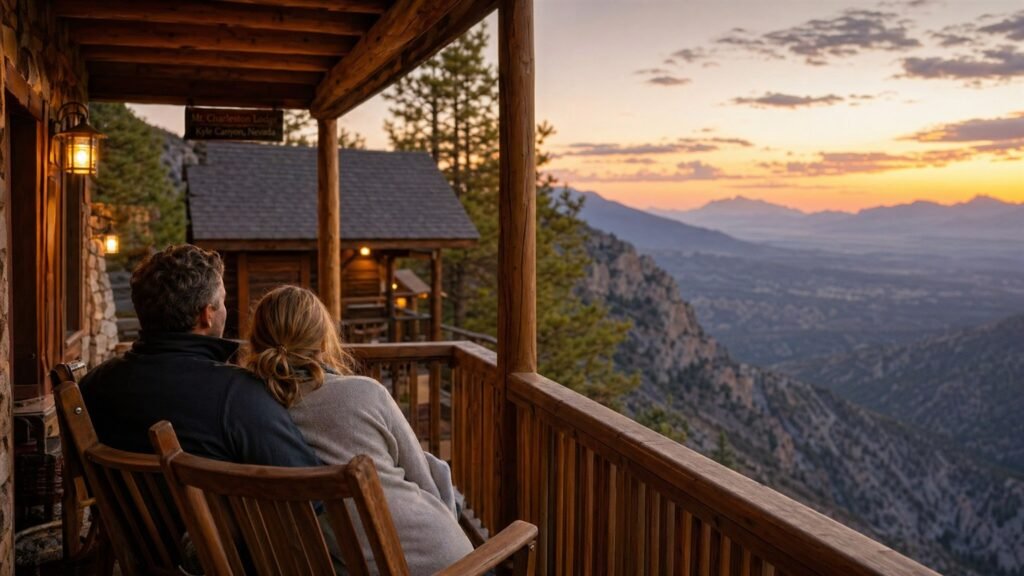
Mt. Charleston Lodge Cabins: The historic Mt. Charleston Lodge has 23 log cabins tucked into the canyon at the end of Kyle Canyon Road. The lodge’s restaurant burned down in 2021 and is currently being rebuilt, which is genuinely sad for everyone who loved it, but the cabins are open and bookable right now.
Guests rave about the private balcony views of the canyon ridgeline, describing them as the best view in Southern Nevada. If you want to turn your mountain day trip into a proper overnight escape from Vegas, this is the most atmospheric way to do it. Book at mtcharlestonlodge.com.
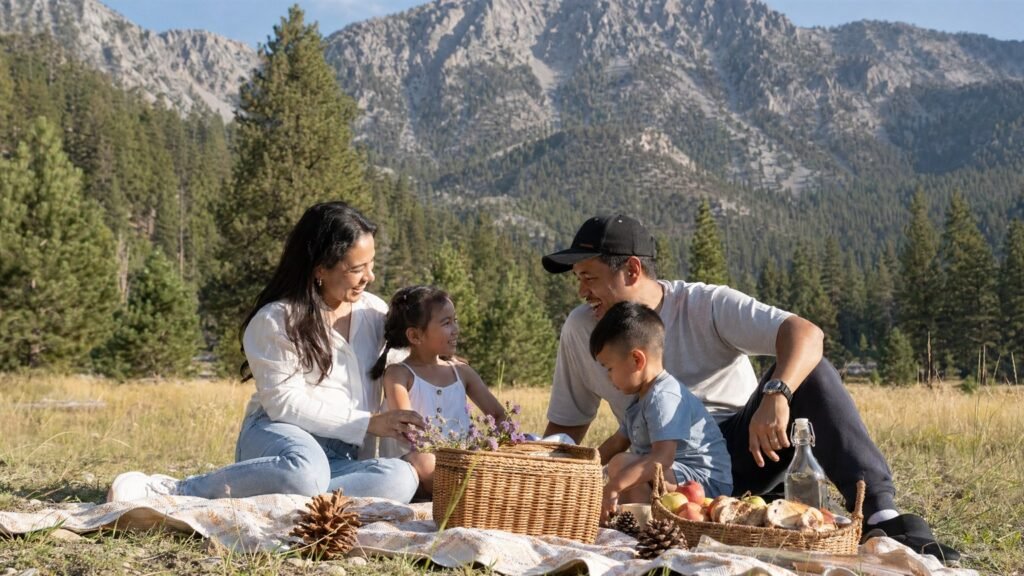
The Picnic Strategy: Here is the move that the smartest visitors make. Stop at a grocery store before you leave Las Vegas, pack a cooler with sandwiches, snacks, and cold drinks, and claim one of the free picnic spots on the mountain.
Deer Creek and Sawmill picnic areas are both free, first-come-first-served, and open dawn to dusk.
Lee Meadows is a wide open meadow where you can spread a blanket and spend two hours doing absolutely nothing productive in 75-degree air. The view is the amazing Spring Mountains at peak summer green. This is the best restaurant on the mountain.
Getting Up There Without Getting Lost
From the Strip, take I-15 North briefly and merge onto US-95 North. Stay on US-95 for about 22 miles. For Kyle Canyon, which takes you to the main village, restaurants, Visitor Gateway, and most trailheads, take Exit 96 for NV-157 West. For Lee Canyon and the ski resort summer activities, take Exit 99 for NV-156 West.
Both roads then climb up through the Spring Mountains through increasingly spectacular scenery. Total drive time from the Strip is 45 to 50 minutes.
No national park entry fee here. Mt. Charleston is in a National Forest, not a National Park, which means you just drive up and start enjoying things. Parking at trailheads and the Visitor Gateway fills up faster than you expect on summer weekends.
Arriving by 8am on a Saturday is not being paranoid. It is being prepared. Show up at 11am on a holiday weekend and you will be parking creatively.
Cell service gets progressively spottier as you climb into the canyons, and by the time you are parked at a trailhead, you may have nothing at all. Download your trail maps offline on AllTrails before you leave. Screenshot the current conditions page from gomtcharleston.com. Tell someone where you are going and when you expect to be back if you are hiking solo.
What to Pack for a Summer Day on Mt. Charleston
Layers: seriously. It is often 30-40 degrees cooler than Las Vegas. A fleece or light jacket is not optional.
Water: more than feels necessary. Altitude dehydrates you faster than you expect, and the nearest refill is the trailhead.
Sunscreen: high-altitude UV exposure is intense even when the air feels cool enough for fleece. Yes, both at once.
Rain jacket or poncho: mandatory for July and August visits. Those afternoon storms are not shy.
Snacks or packed lunch: the nearest grocery store is 45 minutes back down the mountain.
Offline trail maps: download before you leave. Cell service in the canyons is optimistic at best.
Go. Seriously. The Mountain Is Waiting.
The Strip is not going anywhere. The casinos will be exactly where you left them when you get back, faithfully running their air conditioning at full blast, lighting up the sky, serving shrimp cocktails at all hours, and doing everything they do. Vegas is very committed to being Vegas at all times. None of it requires your constant supervision.
What you cannot get back is the day you spent sweating through your shirt on the pavement when an actual pine forest with actual shade and actual 75-degree air was 45 minutes north. That version of the trip, where nobody told you Mt. Charleston existed, is the version to avoid.
Las Vegas is so much more than most visitors realize, and Mt. Charleston is one of the best proofs of that. It is a mountain. It is a forest. It is a ski resort in summer. It is free hiking and $10 chairlift rides and cold coffee and pine-scented air. It is the most surprising and refreshing few hours your Vegas trip can possibly contain. All it requires is an early alarm, a cooler, and a car pointed north on US-95.
The mountain has been there for millions of years. It will be ready for you. Go.